Helping children who are over- or under-responsive to sensory input build self-regulation, reduce meltdowns, and participate more fully in daily life — at home, school, and beyond.
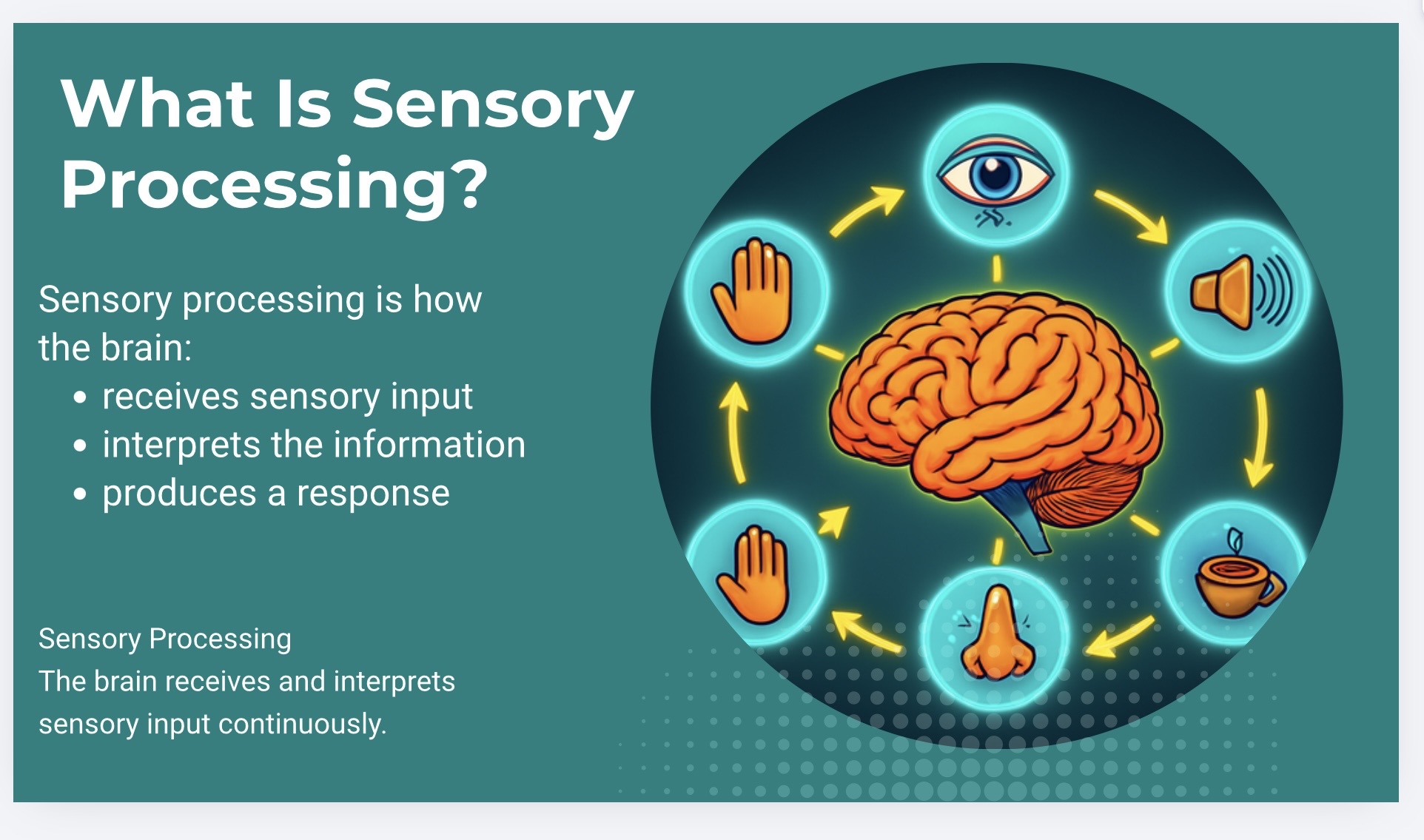
Sensory processing is how the brain receives, organizes, and responds to information from the senses — touch, sound, sight, taste, smell, movement, and body awareness. Most people process sensory input automatically, but for some children the nervous system responds differently, leading to challenges with regulation, behavior, and daily participation.
An occupational therapist supports children and families with sensory processing needs by helping them understand how the child's nervous system responds to sensations, and by teaching strategies that make daily life easier.
Signs your child may have sensory processing challenges
Over-responsive (sensory sensitive)
Meltdowns over clothing tags, seams, or textures
Covering ears or extreme distress at everyday sounds
Avoiding messy play, sand, or certain food textures
Difficulty with haircuts, teeth brushing, or nail trimming
Overwhelmed in busy or noisy environments
Under-responsive or sensory seeking
Constantly crashing into furniture, walls, or other people
Sensory assessment Observation, evaluation, and sensory profile to understand your child's unique nervous system
Sensory diet A personalized schedule of sensory activities woven into the daily routine
Direct therapy Sensory-based play — swinging, deep pressure, obstacle courses, proprioceptive input
Parent coaching Strategies for home, school, and community so gains extend beyond sessions
Why a sensory diet matters
A sensory diet isn't about food — it's a personalized plan of sensory activities that help regulate your child's nervous system throughout the day. When children get the right sensory input at the right times, they're calmer, more focused, and better able to participate in learning and play. We design sensory diets that fit into real family routines without adding overwhelm.
Common questions
Sensory processing disorder (SPD) describes difficulties in the way the brain processes sensory information. It isn't a standalone medical diagnosis but is commonly associated with autism, ADHD, and developmental delays. An OT can assess sensory processing and provide targeted support regardless of diagnosis.
Yes. With the right OT intervention, most children make meaningful progress in regulation, tolerance, and daily participation. Early intervention tends to produce faster results, but older children and school-age kids benefit significantly too.
A sensory diet is a personalized schedule of sensory activities — like jumping on a trampoline, wearing a weighted vest, or doing wall push-ups — that provide the input a child needs to stay regulated throughout the day. It's woven into existing routines, not added as another task.
Sensory-based behaviors often look like defiance or meltdowns but have a neurological root. A child who refuses to wear certain clothes isn't being difficult — their nervous system is genuinely overwhelmed by that sensory input. Identifying the sensory trigger is key to finding effective strategies.
Ready to get started?
Book a free 15-minute consultation — no pressure, no commitment.